
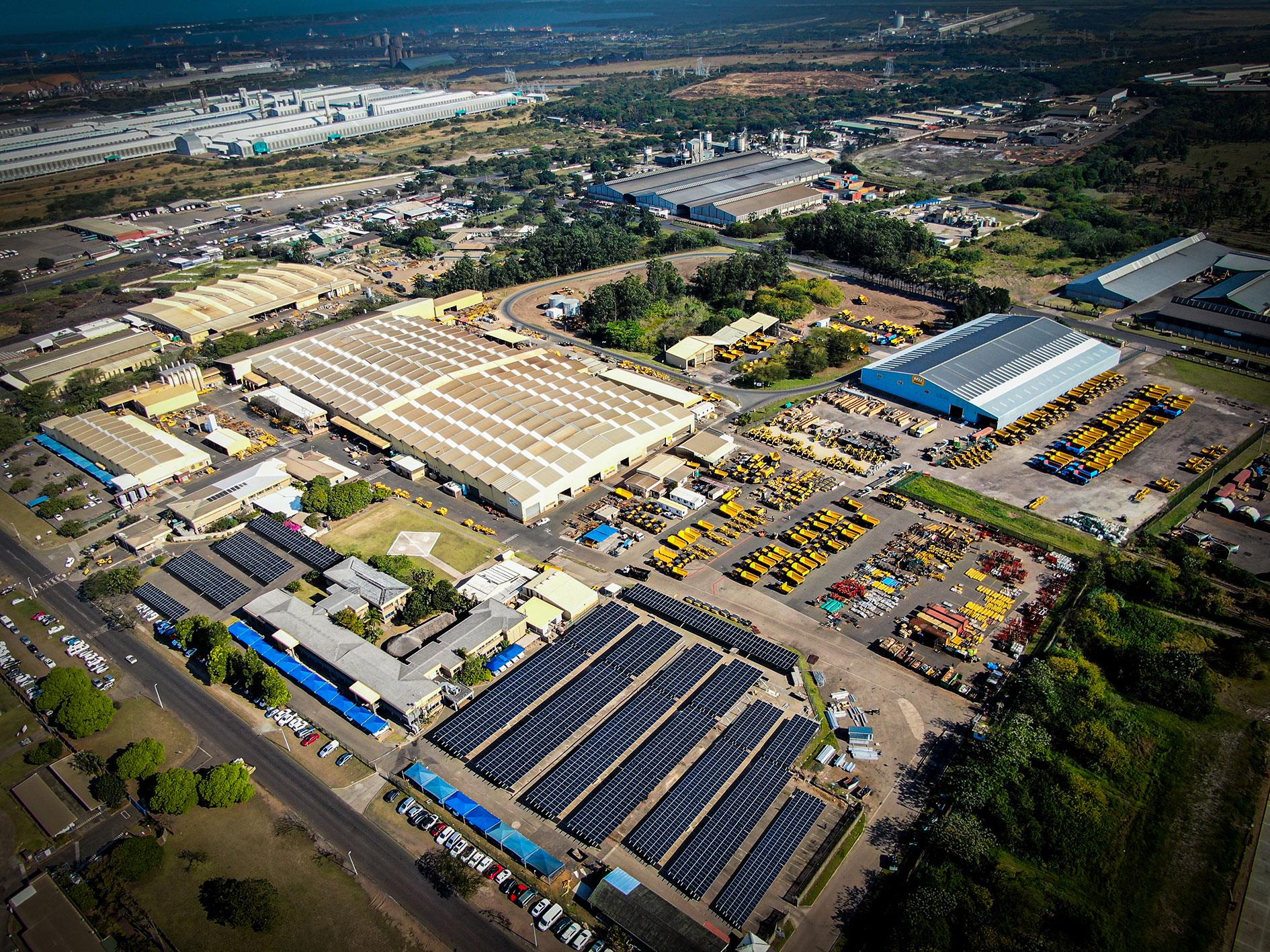
Bell, with its modern 45 000 m² undercover manufacturing facility, has invested almost R22 million in solar energy projects over the past three years. Excavation for Phase 1 commenced in June 2023 and was completed at the end of January 2024, at a cost of R19 million.
This phase comprises a carport installation over the parking area consisting of 2 246 bifacial solar panels, each rated at 550 W and delivering a total capacity of 1 235 kWp. The system is supported by ten 125 kW AC inverters that provide a combined AC output of 1,1 MW.
Phase 2, a rooftop solar installation, began in December 2024 and was completed in April 2025. This 125 kW AC system consists of 224 panels, each rated at 565 W. The project was completed at a cost of R400 000 with installation carried out by Bell’s employees. Since commissioning, the two phases have collectively generated approximately 3,9 GWh of energy.
Phase 3 commenced in March 2026 and is expected to be completed by the end of June 2026. This installation consists of 1 000 panels, each rated at 615 W, delivering a total capacity of 615 kWp. The system will include five 125 kW inverters, producing a combined AC output of 500 kW. The cost for this R2,2 million installation is also being carried out by Bell employees.
All generated solar power is consumed on-site, as the factory’s demand currently exceeds the total generation capacity.
The company has planned for Phase 4 of the project and is looking at a future 500 Kw AC system that would also feed into the Bell site grid.
Bell Equipment’s Director: Group SOP & SH Manufacturing, Dominic Chinnappen, said the solar investment is part of Bell Equipment’s commitment to adopt the latest technologies and innovations to drive the continuous improvement needed to ensure that the factory performs to world-class standards, which includes environmental sustainability.
Other initiatives include energy efficient lighting, air conditioning and ventilation to reduce energy consumption, as well as rainwater harvesting and recycling of hazardous waste, recyclable waste and recyclable metals. In 2025, Bell recycled over 8 600 tonnes, or 97%, of its total recyclable waste.
